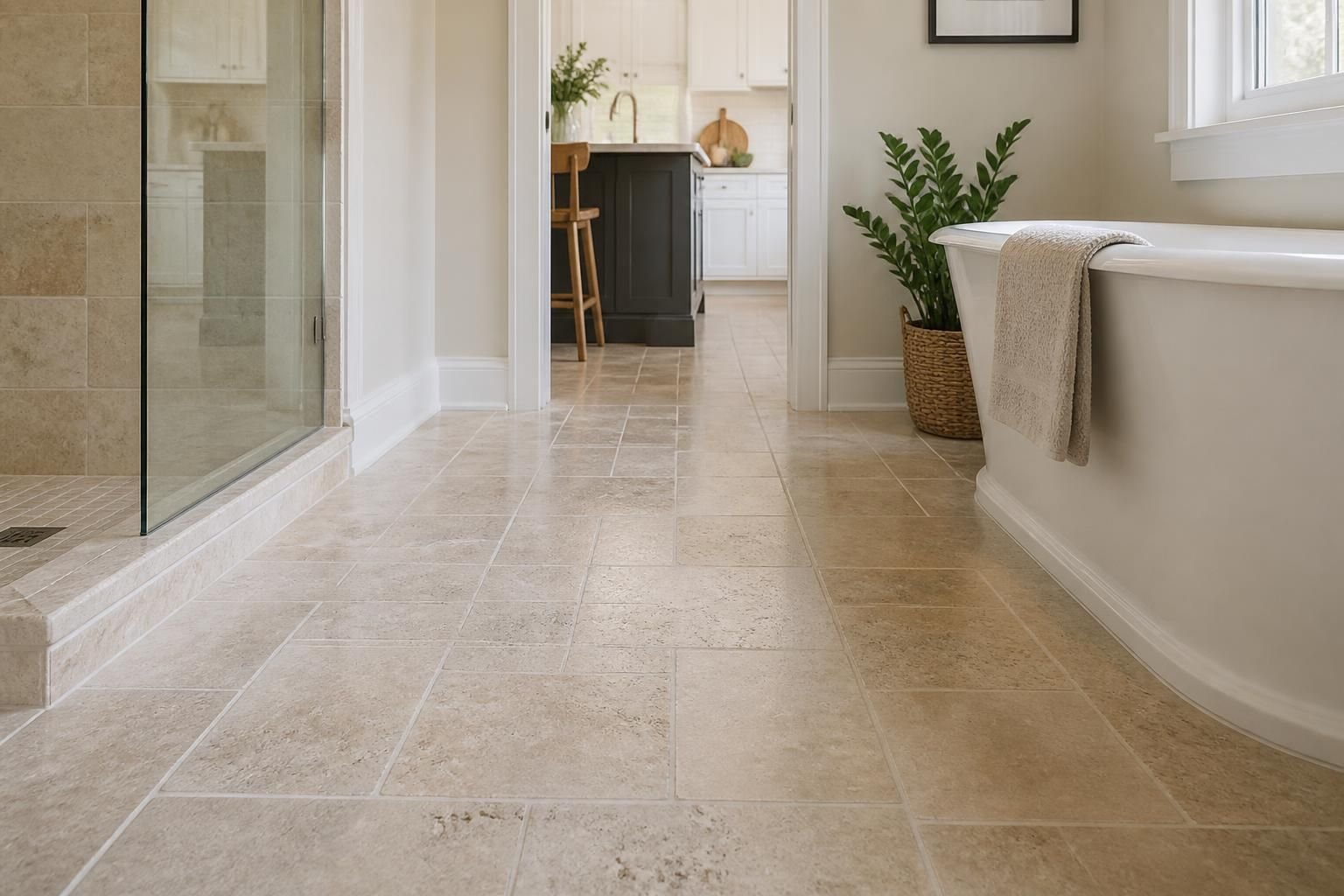
Tile floors that once looked bright can start to feel tired when grout darkens, edges chip, or stone loses its finish. If your kitchen, bathroom, entryway, or patio surface no longer looks clean no matter how much you scrub, it may need more than a quick wipe-down.
Grosse Pointe Tile Cleaning restores tile surfaces for homes and businesses throughout Grosse Pointe Park by removing embedded soil, improving the look of grout lines, and treating natural stone with care. When tile looks dull or uneven, we assess the surface, explain what can be improved, and recommend a restoration approach that fits the material and condition of the floor.
Signs your tile needs help
Tile restoration is often the right next step when routine cleaning stops making a visible difference. Many floors still seem dirty even after repeated mopping because soil has settled into grout, texture, and worn finish layers.
- Grout has darkened: Light grout often turns gray, brown, or patchy after years of use.
- Tile looks hazy: A cloudy surface can remain after cleaners, soap film, or residue build up.
- Stone has lost depth: Natural stone may appear flat, dull, or streaked when it needs restorative care.
- Edges show wear: Traffic areas can become more noticeable than the rest of the floor.
- Sealed surfaces no longer repel soil: If grout or stone absorbs spills quickly, protection may have worn down.
When these signs show up, Grosse Pointe Tile Cleaning can help determine whether cleaning, sealing, or a more focused tile restoration service is the right fit.
What restoration can improve
Tile restoration is not a one-size job. The goal is to improve the appearance of the surface while respecting the material underneath. Some floors need deep cleaning only, while others benefit from sealing, stone care, or a combination of services.
Grout lines
Grout often holds the most visible discoloration. Restoration can help remove embedded buildup, reduce staining, and prepare the lines for sealing so they are easier to maintain.
Tile surfaces
Tile itself may collect film, residue, and dirt that normal household cleaning does not remove. Restorative cleaning can bring back a cleaner, more even look without leaving behind a heavy coating.
Natural stone
Marble, travertine, and other stone surfaces deserve a careful approach. Depending on the stone and its condition, restoration may include deep cleaning, stone sealing, or stone floor cleaning methods suited to the material.
High-traffic areas
Kitchens, bathrooms, entryways, patios, and similar spaces often wear unevenly. These areas benefit from targeted attention because they collect more foot traffic, spills, and residue than quieter parts of the property.
Our restoration process
Every floor is different, so we start by looking closely at the tile, grout, and surrounding stone. That helps us choose methods that clean thoroughly without treating delicate surfaces too aggressively.
- Surface review: We examine the material, discoloration, and wear patterns so the work matches the floor’s condition.
- Preparation: Loose dirt and buildup are removed before restoration begins.
- Deep cleaning: We use professional-grade methods to lift embedded grime from tile and grout.
- Targeted treatment: If the floor includes marble, travertine, or other stone, we adjust the process to fit the material.
- Sealing when needed: Grout sealing or stone sealing may be recommended after cleaning to help reduce future absorption.
This step-by-step approach helps restore the appearance of the surface while keeping the job focused on what your floor actually needs.
Tile and stone care options
Tile restoration often overlaps with other surface care services. That is useful because some floors need more than one type of treatment to look their best again.
- Grout cleaning: Helps remove discoloration and grime from joints between tile pieces.
- Tile sealing: Adds protection to tile surfaces that absorb soil or hold residue.
- Grout sealing: Helps keep grout lines cleaner for longer after restoration.
- Stone cleaning: Addresses buildup on natural stone without using a harsh approach.
- Stone sealing: Helps protect absorbent stone after cleaning.
- Marble floor cleaning: Suited for marble that needs careful restoration attention.
- Travertine floor cleaning: Helpful for travertine surfaces that show soil and wear.
- Stone restoration: Used when natural stone needs more than routine cleaning.
Grosse Pointe Tile Cleaning will explain which combination makes sense so you know what each step is doing for the floor.
Where restoration helps most
Some spaces show wear faster because they handle more foot traffic, spills, and daily use. Tile restoration can make a visible difference across many surfaces throughout a property.
Kitchens
Kitchen floors often collect grease mist, food residue, and repeated foot traffic. Restoration can brighten tile and reduce the dark look that builds up near prep and cooking areas.
Bathrooms
Bathroom tile and grout may show soap film, mineral residue, and discoloration. A restoration service can help the room look cleaner and more cared for.
Entryways
Entry floors take constant wear from shoes, wet conditions, and debris. When the first area people see looks worn, the whole space can feel older than it is.
Patios
Patio tile can gather outdoor soil and surface buildup that dulls its appearance. Restoration helps bring back a cleaner look without replacing the surface.
Why material matters
Tile restoration works best when the process matches the floor material. A cleaner that suits ceramic tile may not be the right choice for marble, and a sealing method that works for grout may not be ideal for porous stone.
That is why we look at the surface before starting. For example, natural stone often needs a more cautious approach than standard tile. Marble and travertine can respond well to careful cleaning and sealing, but they should not be treated the same way as harder tile surfaces with different textures.
In Grosse Pointe Park, that kind of surface-specific care helps protect the look of your flooring while improving the part you see every day.
What to expect during a visit
From the first conversation through the final walk-through, we keep the process straightforward. You tell us what looks wrong, and we help identify the most useful restoration path.
- Clear discussion: We listen to what you have noticed, such as staining, dullness, or uneven color.
- Floor assessment: We review the tile, grout, or stone and explain what can likely be improved.
- Careful service: The work is tailored to the material and the amount of buildup present.
- Practical follow-up: If sealing is appropriate, we explain how it supports the restored surface.
Grosse Pointe Tile Cleaning aims to make tile restoration feel manageable, not complicated. You get a clear understanding of the surface, the process, and the expected result before work begins.
Keeping the restored look
Once a floor has been restored, simple habits can help preserve the result. The goal is not to create extra work, but to reduce new buildup before it settles deep into grout or stone.
- Wipe spills sooner rather than letting them sit.
- Use floor care products suited to tile or stone instead of general cleaners that leave residue.
- Keep abrasive scrubbers away from delicate stone surfaces.
- Use mats at entry points to reduce tracked soil.
- Schedule grout sealing or stone sealing when the surface starts absorbing moisture again.
Small changes like these can make daily cleaning easier and help your restored surface stay brighter for longer.
Tile Restoration for Grosse Pointe Homes
Grosse Pointe’s older and historic homes often have original tile worth preserving rather than replacing. Decades of wear, discoloration, and failing grout can make a sound floor look tired, but restoration brings it back at a fraction of the cost of a tear-out. We restore tile throughout Grosse Pointe Park, Farms, Woods, and Shores, honoring the character of the area’s established homes.
Areas We Serve
We provide tile restoration throughout Grosse Pointe Park, Grosse Pointe Farms, Grosse Pointe Woods, and Grosse Pointe Shores, plus nearby St. Clair Shores and Harper Woods. For helpful tips, visit our tile cleaning blog.
Common questions
Can restoration help grout that looks permanently dirty?
In many cases, yes. Grout that looks permanently dirty is often just deeply saturated with soil, grease, and old residue that ordinary cleaning cannot reach, and professional restoration frequently brings it back much closer to its original look than homeowners expect. We start with deep extraction to lift embedded buildup. If the grout is truly stained beyond cleaning or is uneven in color, color sealing can give it a fresh, uniform shade, and if the grout is cracked or missing we can regrout to rebuild the lines. During your free estimate we assess the grout and recommend the combination of cleaning, color sealing, or regrouting that will help most.
Is tile restoration useful for older floors?
Very much so. Older floors are some of the best candidates for tile restoration, because the tile itself is often still sound while the grout and finish have degraded over many years. Restoration can deep clean and revive dull tile, rebuild or reseal aging grout, and renew worn natural stone, giving a tired floor a dramatically fresher look without full replacement. This is usually far more cost-effective than tearing out and redoing a floor that is structurally fine. During your free estimate we evaluate the condition of the tile, grout, and any stone, then recommend the restoration steps that will bring the most improvement for an older floor.
Do all stone surfaces need the same treatment?
No. Different materials need different treatment, which is a key part of doing restoration correctly. Ceramic and porcelain tile are hard and non-porous and tolerate stronger methods, while natural stone such as marble, travertine, and limestone is softer, porous, and often acid-sensitive, so it requires stone-safe products and gentler techniques to avoid etching or scratching. Grout has its own needs for cleaning, color sealing, or regrouting. Using the wrong approach on the wrong surface can cause damage, so we identify each material first and tailor the process to it. During your free estimate we assess every surface in the floor and match the right treatment to each.
Can sealing follow restoration?
Yes, and sealing is the natural final step after restoration. Once we have cleaned, honed, regrouted, or polished a floor, the surface is fresh and receptive, making it the ideal time to apply a sealer that protects all that work. Sealing helps grout and porous stone resist stains and moisture going forward, so the restored look lasts much longer. Without it, restored surfaces can begin absorbing spills and dulling again sooner than they should. We match the sealer to each material and to how much traffic and moisture the floor sees. During your estimate we will recommend whether and where sealing should follow your restoration.
What rooms usually benefit most from restoration?
Kitchens, bathrooms, and entryways typically benefit most, because they combine heavy use with moisture and spills that wear floors down fastest. Kitchen tile and grout collect grease and traffic, bathroom surfaces battle constant humidity and soap residue, and entryways take the brunt of dirt and grit from outside. Natural stone floors in living and dining areas also gain a lot from restoration when the finish has dulled. Essentially, the busier and wetter the space, the more a restoration improves it. During your free estimate we look at how each room is used and recommend where restoration will make the biggest difference for your home.
How do I know whether cleaning or restoration is needed?
The simplest way is a professional assessment, because the right choice depends on what is actually wrong with the floor. As a general guide, if the tile and grout are structurally sound and simply look dirty or dull, a deep cleaning is often enough. If the grout is cracked, missing, or permanently stained, or the stone is etched, worn, or damaged, restoration steps like regrouting, color sealing, honing, or polishing are needed. Cleaning addresses dirt; restoration addresses damage. During your free estimate we inspect the floor, explain what is causing its condition, and recommend cleaning, restoration, or a combination, so you only pay for what the floor needs.
Tile restoration for Grosse Pointe Park
When tile, grout, or stone starts looking worn, you do not always need replacement. A well-planned restoration can improve appearance, reduce visible buildup, and make the space feel cared for again. For homeowners and businesses in Grosse Pointe Park, Grosse Pointe Tile Cleaning provides focused tile restoration for surfaces that need more than routine maintenance.
Call us +13134763489 or request a free estimate.
Related Services in Grosse Pointe
Explore our grout cleaning, tile sealing, tile regrouting, construction tile cleanup, or return to our Grosse Pointe tile cleaning home page. We proudly serve Grosse Pointe Park, Grosse Pointe Farms, Grosse Pointe Woods, and Grosse Pointe Shores.