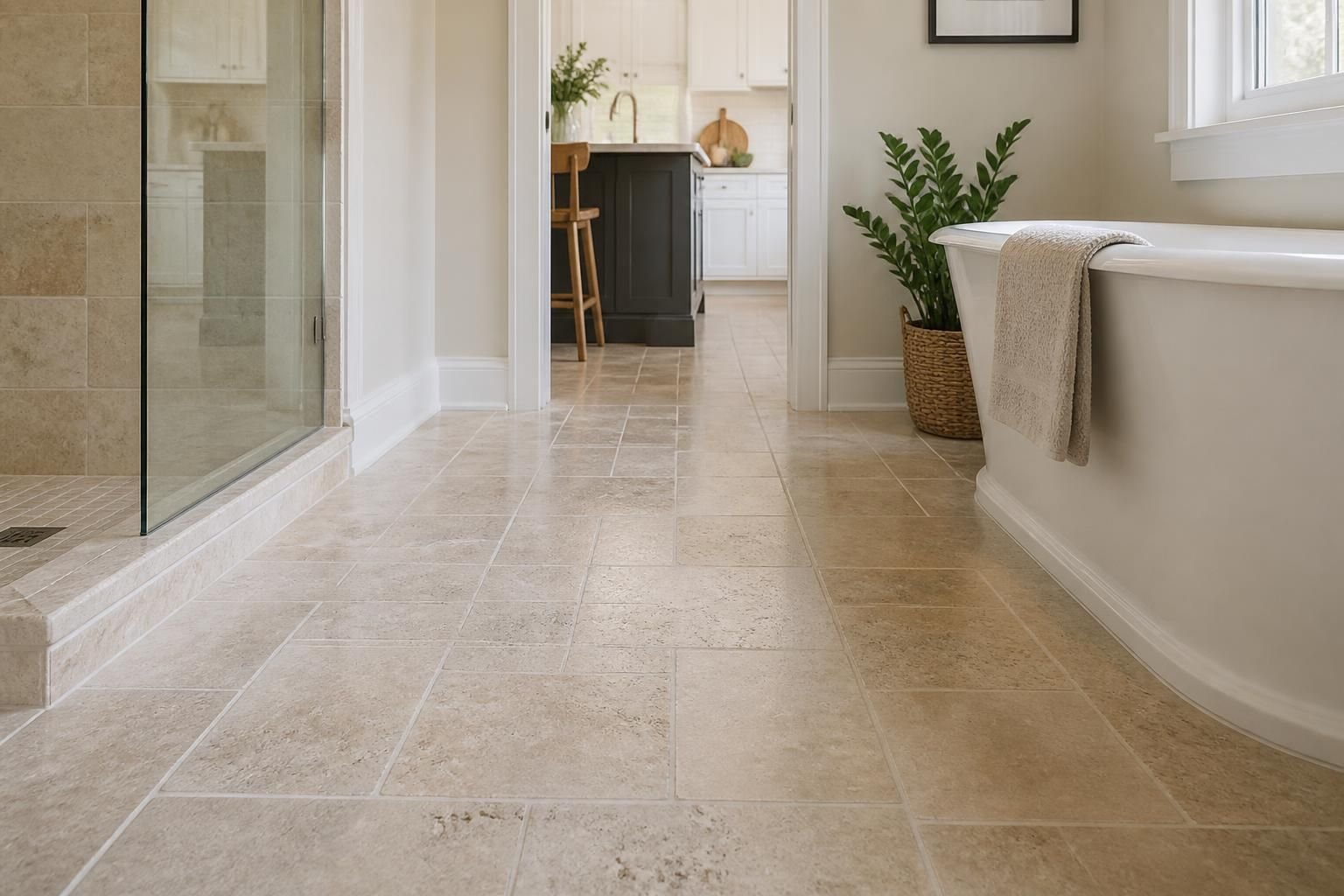
When stone starts looking cloudy, scratched, uneven, or simply tired, it changes the feel of the whole room. A marble foyer may lose its shine, a travertine floor may show worn traffic paths, or a stone surface may hold stains that never seem to lift with routine cleaning.
Grosse Pointe Tile Cleaning restores natural stone for homes and businesses across Grosse Pointe Park. If your stone has lost its color, developed a dull film, or needs stronger protection after years of use, we can evaluate the surface and recommend the right restoration steps.
Stone surfaces we restore
Natural stone deserves a different approach than ceramic tile. Each material responds differently to cleaning, sealing, and restoration, which is why the process starts with identifying the stone type and the condition it is currently showing.
We restore a wide range of surfaces found throughout Grosse Pointe Park properties:
- Marble floors and entryways
- Travertine floors and feature areas
- Stone floors with deep soil buildup
- Stone surfaces that need sealing after cleaning
- Areas with discoloration, etching, or traffic wear
Grosse Pointe Tile Cleaning works with the goal of preserving the character of the stone while improving the appearance of the surface. That means removing buildup without treating every stone the same way.
Signs stone needs attention
Stone restoration is often needed long before the surface looks completely worn out. Homeowners usually notice small changes first, then realize the finish no longer looks even across the room.
Dull appearance
A once-bright marble or travertine floor may begin to look flat, hazy, or shadowed, especially under natural light. This can happen when soil, residue, and everyday wear build up over time.
Traffic paths
Walkways, kitchen routes, and entry areas often show the earliest signs of wear. These paths can look lighter, darker, or less polished than the surrounding stone.
Stains and spotting
Spills can leave marks that become harder to remove as they settle into the stone. Some spots remain visible even after normal cleaning because they have moved below the surface.
Etching and surface marks
Acidic spills and abrasive cleaning products can leave dull marks on sensitive stones like marble. These marks often look like rings, patches, or soft scratches that change the finish without necessarily changing the color.
Our restoration process
Restoration is not one single step. It is a sequence of careful decisions based on the stone type, the finish, and the condition of the surface. We focus on cleaning, correcting, and protecting the stone without taking away its natural character.
- Inspection
We look at the stone, grout lines, surface finish, and problem areas to understand what the floor needs. This helps us choose the right methods for the material.
- Deep cleaning
Soil, residue, and embedded buildup are removed with professional-grade cleaning methods selected for natural stone surfaces.
- Restoration treatment
Depending on the stone, this may include work that improves the appearance of dull spots, traffic wear, or uneven areas across the floor.
- Sealing
When appropriate, we apply sealing to help protect the stone from future staining and to support easier maintenance.
Because stone is porous and sensitive, the order matters. A surface that looks dull may need more than cleaning alone, while a heavily used floor may need both cleaning and sealing to look its best again.
Marble and travertine care
Marble and travertine are popular choices for elegant floors, but they also show wear more quickly than many people expect. Their beauty depends on the surface being treated with care during every step of restoration.
Marble floor cleaning
Marble can lose its reflective finish from everyday use, foot traffic, and residue left behind by the wrong cleaners. We restore marble with methods designed to address buildup and surface wear without using harsh treatment that can make the damage worse.
Travertine floor cleaning
Travertine often has pits, texture, and natural variation that trap soil and discoloration. Cleaning this material requires attention to detail so the surface is refreshed without leaving residue behind.
After the stone is cleaned, sealing may help reduce the chance of future staining and make routine care easier for homeowners and business owners.
Stone sealing options
Restoration often works best when stone is sealed after cleaning. Sealing does not make stone maintenance-free, but it can help protect the surface from absorbing spills and grime as quickly.
- Stone sealing for natural surfaces that need added protection
- Grout sealing around stone floors where joints absorb dirt and moisture
- Tile sealing for surrounding hard surfaces that should be part of the same care plan
For many properties, sealing is especially useful after deep cleaning or when the stone is part of a busy kitchen, bath, entryway, or patio area. The right seal can support a cleaner look and easier upkeep between professional visits.
What affects stone appearance
Stone can change for several reasons, and not every issue comes from the same source. Understanding the cause helps prevent recurring damage and helps us choose the right restoration method.
- Built-up soil
Daily foot traffic can grind fine dirt into the surface, making the floor look darker, flatter, or streaked.
- Wrong cleaners
Products that are too acidic or too harsh can affect sensitive stone finishes and leave marks that do not rinse away.
- Spill penetration
Liquids can soak into porous stone and leave discoloration if they are not cleaned quickly and correctly.
- Wear patterns
Repeated use in the same areas can create differences in tone and sheen across the surface.
Once those causes are identified, restoration can be targeted toward the part of the surface that needs it most instead of using a one-size-fits-all approach.
How visits work
Every stone restoration project begins with a conversation about the surface, the symptoms you are seeing, and the type of result you want for the space. From there, we evaluate the floor and explain the most practical next steps.
Grosse Pointe Tile Cleaning serves Grosse Pointe Park and nearby communities such as Grosse Pointe Woods, Grosse Pointe Farms, Grosse Pointe Shores, Grosse Pointe Woods, Harper Woods, St. Clair Shores, Eastpointe, Morningside, East English Village, Cornerstone Village, Warren, and Jefferson Chalmers. That local focus helps us respond with service tailored to the flooring found throughout the area.
You can expect a process that respects the surface and keeps the work focused on results. We pay attention to the details that affect final appearance, including finish consistency, residue removal, and protection after cleaning.
Care after restoration
Once stone has been restored, the way it is maintained matters. Routine care helps the surface hold its appearance longer and reduces how quickly soil builds back up.
- Use cleaners made for natural stone
- Wipe spills before they settle into the surface
- Avoid abrasive pads that can scratch finish
- Limit products that leave sticky residue
- Schedule sealing again when the surface starts absorbing spills more quickly
Homeowners who keep up with simple maintenance often get more from each restoration visit because the surface stays cleaner between cleanings.
Stone Restoration for Grosse Pointe Homes
The natural stone in Grosse Pointe’s fine homes — marble, travertine, and limestone — can lose its finish to years of wear, etching, and dull traffic patterns. Restoration grinds away the damage and rebuilds the surface, returning the stone to a smooth, consistent finish. We restore stone across the Grosse Pointe communities, treating each material with the care these premium surfaces deserve.
Areas We Serve
We provide stone restoration throughout Grosse Pointe Park, Grosse Pointe Farms, Grosse Pointe Woods, and Grosse Pointe Shores, plus nearby St. Clair Shores and Harper Woods. For helpful tips, visit our tile cleaning blog.
Common questions
Can restoration help a stone floor that looks cloudy?
Yes, a cloudy stone floor is one of the most common problems restoration solves. Cloudiness usually comes from one of two things: a film of residue and hard-water minerals sitting on the surface, or etching and worn polish in the stone itself. If it is residue, deep cleaning with stone-safe products removes the haze and restores clarity. If the cloudiness is etching or lost shine from wear and acidic spills, honing and polishing refinish the surface and bring back the reflective, even finish. Restoration addresses both causes. During your free estimate we determine why your stone looks cloudy and recommend cleaning, polishing, or a combination to clear it up.
Does every stone surface need sealing after cleaning?
Not every surface, but sealing is recommended for most porous stone, and cleaning or restoration is the ideal time to do it. Natural stone absorbs liquids that cause staining and dullness, so a quality sealer helps it resist spills and moisture and stay easier to maintain. How much a surface needs it depends on the stone type and how absorbent it is, which we check with a simple water test. Dense, low-absorbency stone may need little sealing, while porous stone like travertine, limestone, and marble benefits significantly. During your estimate we test your stone and recommend sealing only where it will genuinely protect and extend the life of the surface.
Can you work on older stone surfaces?
Absolutely. Older stone surfaces are some of the most rewarding to restore, because the stone itself is often still beautiful and structurally sound beneath years of wear, dullness, and buildup. Restoration can deep clean aged stone, hone away light scratches and etching, polish to renew the shine, and seal to protect it going forward, giving a tired surface a dramatically fresher look without replacement. We adjust every step to the age and condition of the material to protect it. Whether it is a decades-old marble floor or vintage travertine, we assess its condition during your free estimate and recommend the gentlest effective way to bring it back.
What if the stone has stain marks?
Stain marks are handled differently from dirt, and the right fix depends on the type of stain. Many stains sit within the porous stone and can be drawn out with specialized poultice treatments that pull the discoloration up out of the surface. Others, like etch marks from acidic spills, are actually surface damage rather than stains and are corrected by honing and polishing. Some deep or old stains may lighten significantly rather than disappear completely. We identify what kind of mark you have before treating it, so we use the correct method. During your free estimate we examine the stains and give you a realistic idea of the results.
How do I keep stone looking better between visits?
A few simple habits go a long way. Use only pH-neutral, stone-safe cleaners rather than acidic or all-purpose products, which can etch and dull the surface over time. Wipe up spills promptly, especially anything acidic like juice, wine, or coffee, and use mats at entrances to catch grit that scratches stone. Dust-mop or vacuum regularly so abrasive particles do not grind into the finish, and use coasters and felt pads under objects. Keeping the stone properly sealed also helps it resist stains between deeper services. During your visit we are happy to share care tips tailored to your specific stone so it stays looking its best longer.
Can restoration improve both beauty and protection?
Yes, that is really the goal of stone restoration. The process improves beauty by cleaning, honing, and polishing the stone to renew its color, clarity, and shine, and it improves protection by sealing the surface so it resists stains, spills, and moisture going forward. In other words, restoration does not just make the stone look better on the day we finish; it helps keep it looking better for much longer. The combination of a renewed finish and proper sealing means less absorption, easier maintenance, and a surface that holds its appearance. During your free estimate we recommend the right mix of restoration and sealing for your stone.
Request a quote
If your stone floor, marble surface, or travertine area needs attention, Grosse Pointe Tile Cleaning can help you understand the condition and choose the right next step. From deep cleaning to sealing and restoration, we provide careful service for properties throughout Grosse Pointe Park.
Call us +13134763489 or request a free estimate.
Related Services in Grosse Pointe
Explore our stone cleaning, stone sealing, marble floor cleaning, travertine floor cleaning, or return to our Grosse Pointe tile cleaning home page. We proudly serve Grosse Pointe Park, Grosse Pointe Farms, Grosse Pointe Woods, and Grosse Pointe Shores.