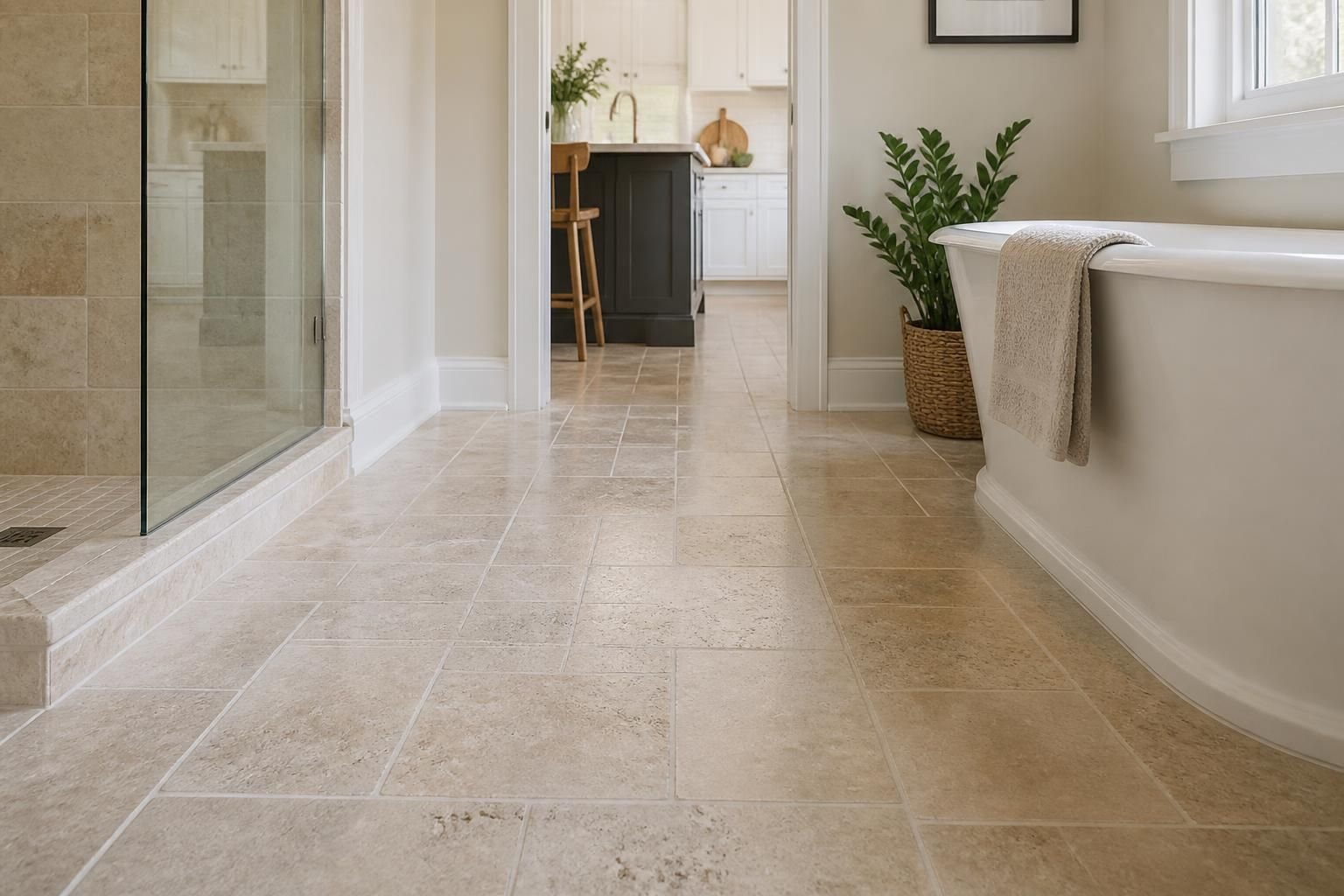
Tough stains on floor tile are frustrating precisely because ordinary mopping does nothing for them. Whether it is a dark patch in the grout, a rust ring, a grease mark by the stove, or a mystery stain that keeps reappearing, the key to removing it effectively is matching your method to the type of stain — and knowing when to stop before you damage the floor. Here is a practical, step-by-step approach for Grosse Pointe homeowners.
Quick answer: To remove tough floor-tile stains, first identify the stain, then start with the gentlest method. Use an oxygen-based cleaner for organic stains such as food, grease, and mildew, a dedicated rust remover for rust, and stone-safe methods for marble or travertine. Stains that keep returning are trapped deep in grout and need professional extraction.
First, Identify the Stain
Effective stain removal starts with understanding what you are dealing with, because the wrong treatment can set a stain permanently or damage the tile. Organic stains (food, coffee, grease, pet accidents, mildew) respond to oxygen-based cleaners. Mineral stains such as rust and hard-water deposits need different, more targeted treatment. And on natural stone, acidic products that might work on ceramic will etch the surface. Take a moment to consider the source and the tile material before you begin — it saves time and prevents mistakes.
Start Gentle and Escalate Carefully
The golden rule of stain removal is to begin with the gentlest method and only escalate if needed. Aggressive chemicals and hard scrubbing are where floors get ruined. Start with warm water and a pH-neutral cleaner, then move up to an oxygen-based cleaner or a baking-soda paste, and only consider anything stronger with real caution — and never on natural stone. Always test any new product on an inconspicuous spot first.
Removing Organic Stains (Food, Coffee, Grease, Mildew)
Most everyday floor stains are organic, and an oxygen-based cleaner is the go-to. Mix oxygen bleach (a powdered, color-safe product) with warm water into a solution or paste, apply it to the stain and surrounding grout, and let it dwell for five to ten minutes so the oxygen can break down the staining. Then scrub along the grout lines with a stiff nylon brush and rinse thoroughly. For grease near the stove, a degreasing tile cleaner applied before the oxygen treatment helps cut the oily film first. Baking soda paste is a gentler alternative that works well on lighter organic stains.
Removing Rust and Mineral Stains
Rust stains — from metal furniture legs, cans, or appliances — and hard-water mineral deposits will not respond to ordinary cleaners. They require a dedicated rust remover formulated for tile, used strictly according to the label and never on natural stone, which it will damage. Apply carefully to the stain only, keep it off surrounding stone surfaces, and rinse well. Because rust removers are more aggressive, this is often a point where calling a professional is the safer choice, especially in homes with marble or travertine nearby.
Removing Stains From Natural Stone
Marble, travertine, and limestone need special handling, since acids etch them on contact. Never use vinegar, lemon, or general bathroom cleaners on stone floors. For organic stains on stone, a poultice — a paste that draws the stain out of the pores as it dries — is the standard approach, but it takes time and care. Etch marks and dull spots are not stains at all; they are surface damage, and they usually require professional stone honing to remove. If your stone floor has stubborn staining, professional stone cleaning is far safer than experimenting with products.
Dealing With Stains That Keep Coming Back
One of the most common frustrations is a stain that seems to return days after you clean it. This almost always means the soil is trapped deep in porous grout, below where your brush can reach. Surface cleaning removes the top layer, but the stain re-emerges as the trapped material works back up. The only reliable fix is deep extraction that flushes the soil out of the grout entirely — the core of professional grout cleaning. Once the grout is genuinely clean, sealing it prevents the problem from recurring.
Odor-Causing Stains
Some stains come with a smell — pet urine in bathroom tile is the classic example. Cleaning the surface may reduce the appearance, but the odor returns with humidity because the source is trapped in the grout. Enzyme-based treatments break down the odor-causing compounds, and for stubborn cases our tile odor removal service removes the source rather than masking it. Sealing afterward keeps future spills from soaking back in.
What to Avoid
A few cautions save floors from serious damage. Do not mix cleaning products — combining bleach with vinegar or ammonia releases dangerous fumes. Avoid chlorine bleach on grout, which weakens it and only lightens the surface. Skip acidic cleaners and abrasive powders on natural stone. And resist the urge to scrub harder with metal tools, which scratch tile and wear grout. If a stain resists gentle, appropriate methods, that is your signal to stop and consider professional help rather than escalating to something that could harm the floor.
When to Call a Professional
Bring in a professional when stains keep returning after cleaning, when they sit in natural stone, when rust or deep grease will not lift, or when the floor is in an older Grosse Pointe home with original tile you cannot risk damaging. Professional hot-water extraction removes what household methods cannot, safely and without the trial-and-error that risks your surfaces. Explore our full range of tile, grout, and stone services or return to our Grosse Pointe tile cleaning home page to learn more.
The Bottom Line
Removing tough floor-tile stains effectively is about strategy, not strength: identify the stain, start gentle, use oxygen cleaners for organic stains and dedicated products for rust, protect natural stone, and recognize when a returning stain means the soil is trapped deep in the grout. With the right approach — and professional help for the stubborn cases — even floors you had given up on can come clean.
Frequently Asked Questions
Why do my tile stains keep coming back after cleaning?
Because the soil is trapped deep in porous grout, below where a brush can reach. Surface cleaning removes the top layer, but the stain re-emerges. Professional hot-water extraction removes it entirely, and sealing prevents it from recurring.
How do I remove rust stains from floor tile?
Use a rust remover formulated for tile, following the label carefully, and never on natural stone, which it will damage. Because rust removers are aggressive, professional help is often the safer choice.
What removes organic stains like food and grease from tile?
An oxygen-based cleaner applied to the stain and grout, left to dwell for several minutes, then scrubbed along the grout lines and rinsed. A degreaser first helps with grease near the stove.
Stains That Will Not Budge?
Some stains need professional extraction. Grosse Pointe Tile Cleaning can help. Call us +13134763489 or request a free estimate.